We said no
Two people asked us for the same magazine. We can't do it.
The one reader who has told us he would pay a premium asked for the one thing we are least able to give him.
When we started asking people what they missed, two readers came back with the same answer: Scope. They know each other, so this is one enthusiasm shared rather than two independent votes — but it was the answer that came fastest, and with the most feeling.
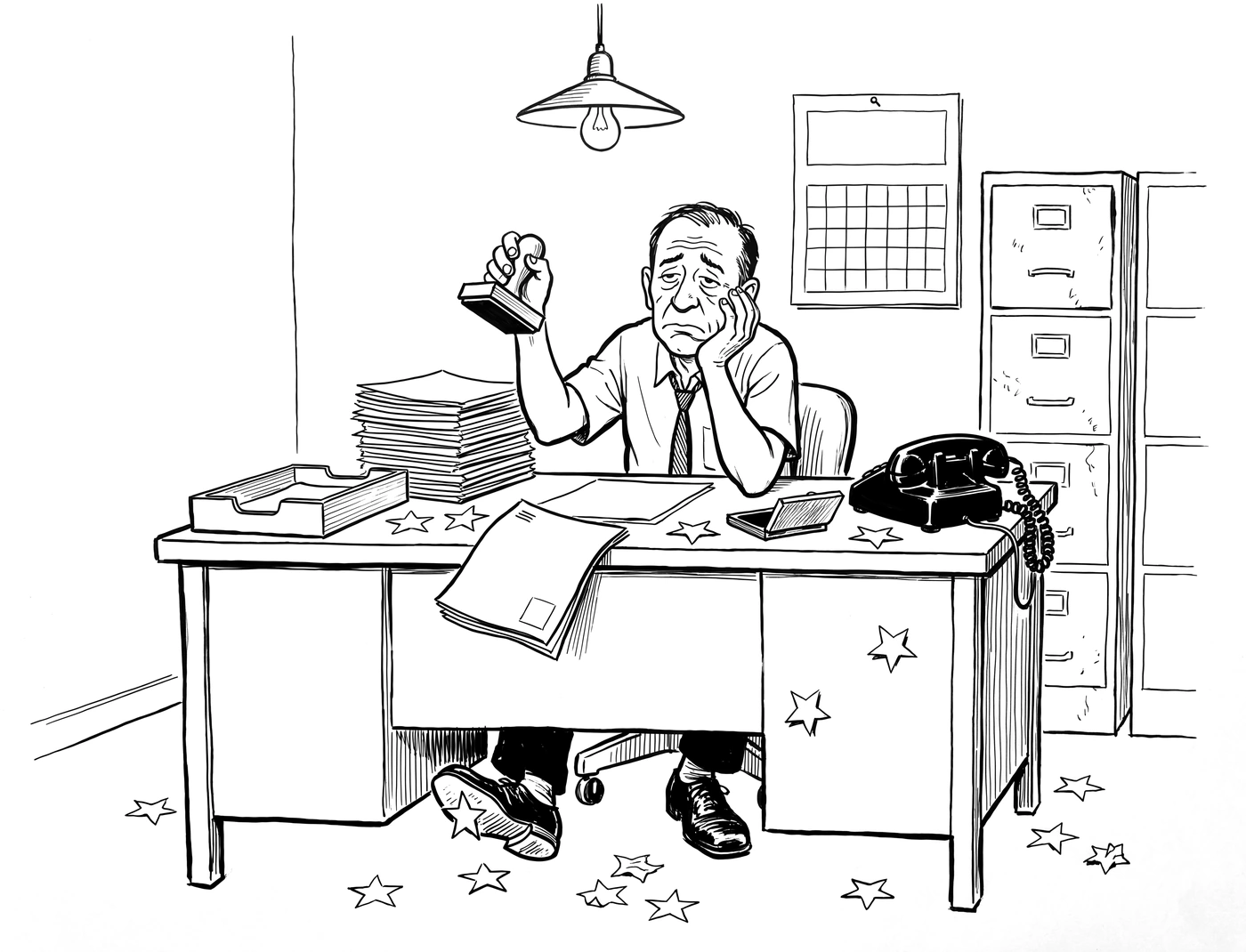
It ran from 1966 to 1996, published by Republican Press.1 A weekly men's magazine, banned by the censorship board seven times in four years, taken to the Supreme Court and unbanned, banned again — and remembered by a generation of South Africans mostly for the little black stars it printed over nipples to stay just inside the law.1,2
What is interesting is what the two men actually wanted. Neither of them asked for the pictures. They wanted the writing — the long reported pieces, the kind of journalism that got done in a magazine nobody took seriously.
Why we can't
A book is one thing with, usually, one or two authors. A magazine is a hundred things stapled together, and every one of them was licensed separately.
The photographs belong to photographers. The people in the photographs have their own rights in their own likenesses. The articles belong to writers who were often freelance and whose contracts, where they still exist, almost certainly granted one-time use. The cover artwork, the advertisements, the cartoons — separate again. To reprint one issue you would need to clear all of it, from a publisher that closed thirty years ago, for contributors nobody has a list of.
It is not a hard rights question. It is an impossible one, and the impossibility is structural rather than a matter of somebody saying no. Nobody has said no. There is nobody left to ask.
What we would do instead, if anyone wanted it
The demand was for the journalism. The journalism has named authors, and named authors can be found, or their estates can. An anthology of pieces by two or three identifiable writers is a completely different proposition from a facsimile of a magazine — smaller, slower, and actually possible.
We are not doing that either, yet. But it is the shape of the only version that works, and we would rather say that out loud than let two people keep hoping.
We answer everyone who nominates a book, including when the answer is no. If there is something you cannot get hold of, tell us — we will look it up properly and tell you what we find, whether or not we can do anything about it.
Sources
- Scope, founded 1966, published by Republican Press, final issue 1996; banned by the South African censorship board in 1972, overturned by the Supreme Court, banned again in May 1976. Scope (magazine)
- Gerber & Froneman, "The rise and demise of Scope magazine: a media-historical perspective", Ecquid Novi 32(1) — on the magazine's position against the censorship laws of the period. NWU institutional repository