Independent editions · South Africa

Remarkable books deserve another life.

EDBooks finds books that have fallen out of print, out of fashion or out of reach — then edits, illustrates and prints them properly, in small runs, for the readers who still want them.

Or pledge instead of ordering, read the journal, or name a book you cannot find.

One book is printed. Two are going on a press. The Machine Stops is bound and real — the first run came back on the wrong grain and would not lie open, so we paid for a second on the right stock rather than ship something that fights you, and the next is its third run. Three Men in a Boat and The Old Man’s Boy Grows Older are finished files, covers and all. Both go on a press as soon as the printer confirms — quoted at their real extents, waiting on nothing but his word. We still take no money through this site — no cart, no card, no account. You say you want a copy, we tell you what delivery costs, and you decide then.

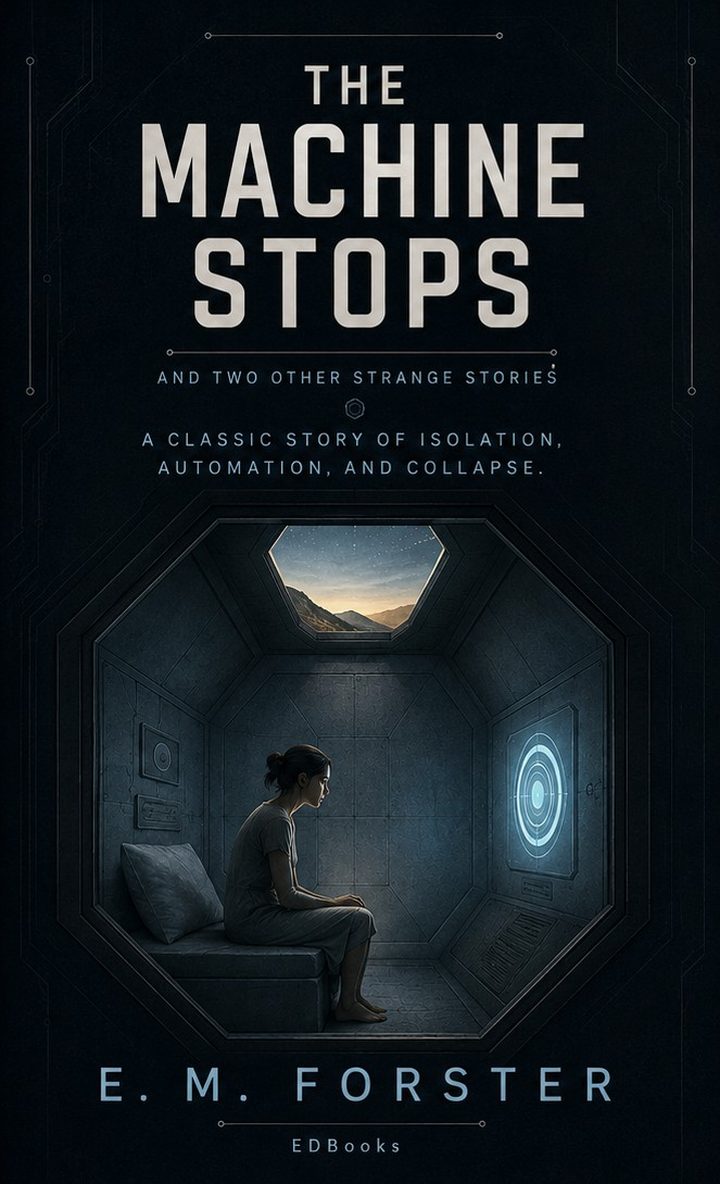
Cover of the EDBooks edition of The Machine Stops and Two Other Strange Stories by E. M. Forster: a woman sits alone on the floor of a hexagonal cell, its panelled walls lit from within, a hexagonal window above her showing a sunrise over mountains, and a small glowing screen on the wall at her side.

The cover of the printed book — 130 × 198 mm

Why EDBooks

Not everything worth reading is still on a shelf.

01 — Find

Books with readers but no publisher

Some disappeared because the demand was too small for warehouse economics. Some are out of copyright but survive only as indifferent scans. Others are still protected and simply unavailable.

02 — Verify

Rights before typesetting

Out of print does not mean out of copyright. We establish the rights position and pin the source text before a word is set. Where a work is still protected, we approach the holder — or we park it.

03 — Make

Short runs, not hopeful warehouses

Properly edited, newly illustrated, set to a house standard, and printed in small runs or on demand. We would rather make fifty books people want than five hundred we hope they might.

The catalogue

Three books, seven shelves, and a way in.

One is printed and can be in your hands now. Two are finished files — interiors, covers and all — and go on a press as soon as the printer confirms. Below those sit the seven series everything we take on belongs to, and the way you tell us what to look for next.

In print

Printed · order one

The Machine Stops

E. M. Forster — and two companion stories

A curated three-story Forster volume, newly illustrated and newly introduced. Printed twice already: the first run came back on the wrong grain and would not lie open, so we paid for a second on the right stock rather than ship something that fights you. The run now open is its third.

  • Extent 102 pages
  • Format 130 × 198 mm paperback
  • Series Forgotten Futures · No. 1
  • Price R299 · plus delivery at cost
  • Next run Closes at ten copies, or 31 October
Order a copy

Read about this edition

Going to print
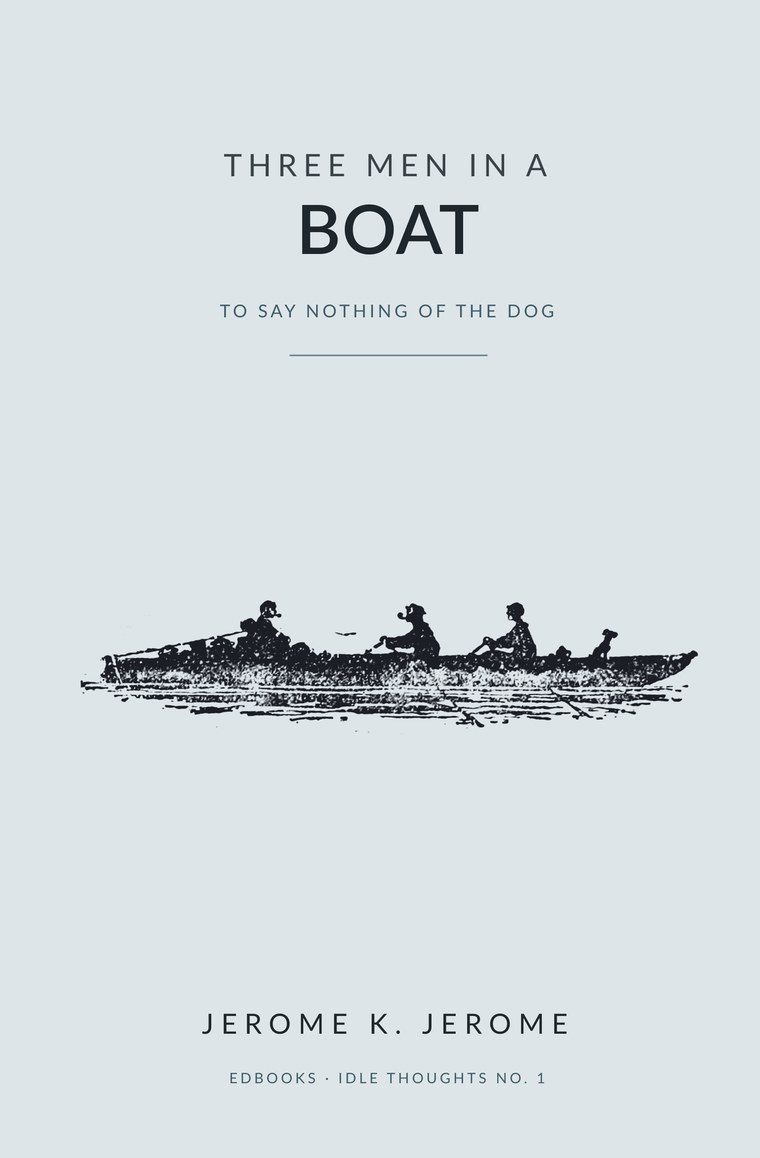
Cover of Three Men in a Boat

Print-ready · waiting on the printer

Three Men in a Boat

Jerome K. Jerome — with A. Frederics’ 1889 drawings and a decorated initial on every chapter

The 1889 text, and sixty-seven of A. Frederics’ original drawings, lifted off a first edition and restored at full resolution. Nobody is certain who Frederics actually was. The title page is what we print, and we do not pretend to more than that. Every chapter opens on one of the 1889 initial blocks. No block for the letter H survived in the scan, so that one was drawn for this edition — and the book says so on its colophon.

  • Extent 264 pages · set and measured
  • Illustrations 67 drawings from the 1889 edition · 19 decorated initials, one per chapter
  • Series Idle Thoughts · No. 1
  • Price R460 · plus delivery at cost
  • Status Print-ready · interior and cover complete
Order a copy

Order now and your copy is in the run — or pledge instead.

Going to print
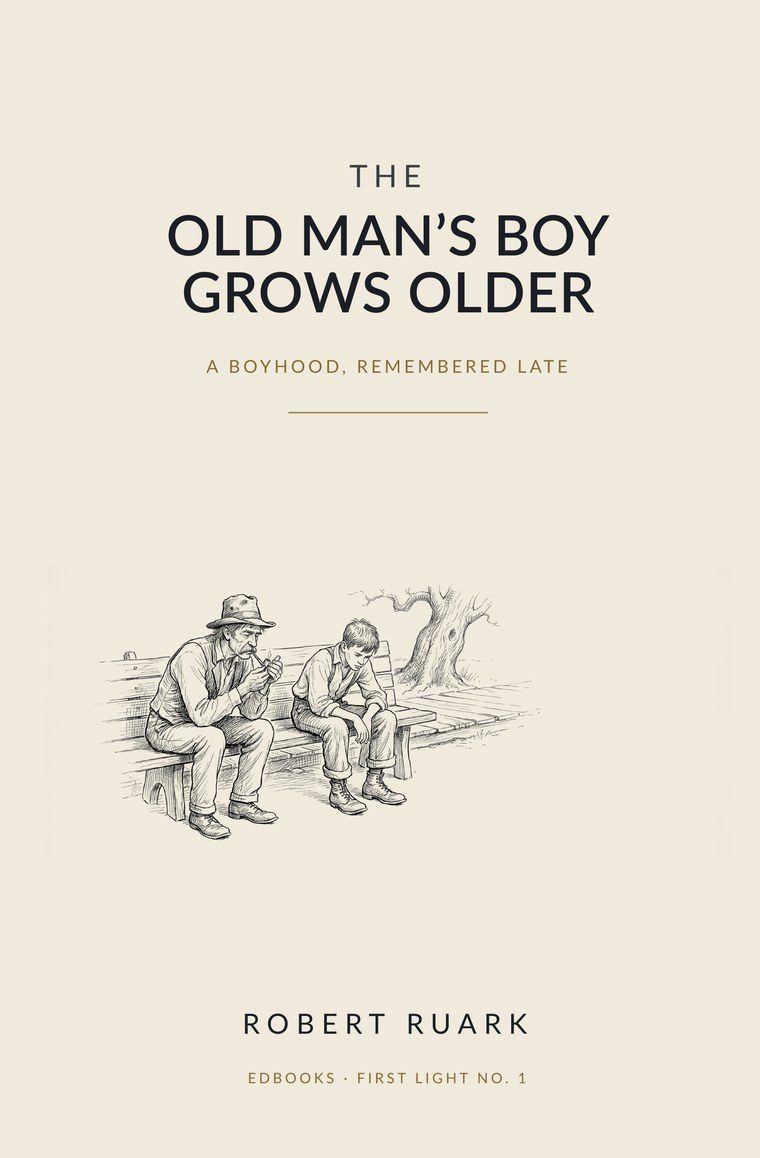
Cover of The Old Man’s Boy Grows Older

Print-ready · waiting on the printer

The Old Man’s Boy Grows Older

Robert Ruark — out of print for decades

Ruark’s 1961 companion to The Old Man and the Boy. The original line drawings are Walter Dower’s, and we could not establish when he died — without that we cannot clear them, so rather than chance it this edition carries thirty-one new drawings made for it, and says so on its own pages. The text is set from the first edition and has been read against it twice; what we found, and what we corrected, is printed in the book.

  • Extent 332 pages · set and measured
  • Illustrations 31 new drawings, made for this edition
  • Series First Light · No. 1
  • Price R490 · plus delivery at cost
  • Status Print-ready · interior and cover complete
Order a copy

Order now and your copy is in the run — or pledge instead.

Seven shelves

Where the books are going

The seven series

Named for the readers who asked, not for a bookshop shelf

Every title we take on sits in one of seven series. They came out of what readers actually told us they miss — which is why there is no “Classics” among them, and why we are not reprinting Dracula: you can buy that anywhere tonight, for less than we could make it.

  • Africana South African history, exploration, memoir
  • First Light Hunting, fishing, boyhood outdoors
  • Idle Thoughts Comic writing
  • Forgotten Futures Early science fiction
  • Forgotten Worlds Weird, gothic, supernatural
  • The Locked Room Detective and spy
  • Far Places Adventure
Name a title for one

What we are looking at next

Open programme

A programme, not a book

Lost Books

The pipeline, not a product

You tell us about a book you cannot get. We investigate its bibliographic history, who holds the rights now, and whether an edition could work economically. Nominations are open to anyone.

  • Open to Anyone
  • Cost None
  • We check Rights, first
Nominate a book

or tell us what you would read

Cover of the EDBooks edition of The Machine Stops and Two Other Strange Stories by E. M. Forster: a woman sits alone on the floor of a hexagonal cell, its panelled walls lit from within, a hexagonal window above her showing a sunrise over mountains, and a small glowing screen on the wall at her side.
  • Format Softcover · 130 × 198 mm
  • Extent 102 pages
  • Paper 80 gsm white bond, grain parallel to the spine
  • Interior Black, both sides · illustrated
  • Cover 300 gsm, full colour, matt laminated, creased at the spine
  • Binding Perfect bound
  • Price R299 · plus delivery
  • ISBN Not yet assigned
  • Print proofs Two runs; corrected copies 18 September
  • Ordering Open · commitment, not payment
  • Pledges Open

The first book · In print

The Machine Stops

Forster wrote it in 1909: a civilisation living in separate underground cells, everything delivered, everyone connected through screens, nobody touching. Then the Machine develops a fault.

Read now, these stories resonate uncannily with a world shaped by networks, automation and life increasingly lived through systems. We have set all three as one curated volume rather than leaving them buried in a collected edition.

In this volume

  • Lead The Machine Stops 1909
  • The Other Side of the Hedge Collected 1911
  • The Celestial Omnibus Collected 1911

What makes this edition

Original monochrome illustrations commissioned for the volume, a new introduction covering all three works, a note on the texts, an author note and an afterword. Body text is fully justified to a house typographic standard, with live typography throughout rather than flattened images.

The texts are set from a pinned, verified source and cross-checked against Project Gutenberg — so you know exactly what you are reading, which is more than most reprints will tell you.

How we make them

Every EDBooks title is a softcover: a 130 × 198 mm page, perfect bound, with a full-colour laminated cover creased at the spine so it opens without cracking. There is no hardcover edition. If we ever make one, it will say so here.

The one thing we will not compromise on is grain direction. Paper has a grain, like wood, and in a bound book it has to run parallel to the spine — otherwise the block fights you, springs shut and bows on the shelf. It is invisible on a specification sheet and obvious the moment you hold the book. Our first run came back the wrong way round; we paid for a second rather than send it out.

Printed in South Africa, in small runs, on a digital press — which is why we can reprint six copies when six people want them, instead of guessing at a thousand.
In print · ready now

Order a copy

R299, plus delivery charged at cost. No payment on this site — we invoice by EFT once your copy is ready to ship, and you can still say no at that point.

The next run closes at ten copies, or 31 October, whichever comes first. Printing ten at once is what makes a small press work; printing one at a time is what closes it.

Wanting one of the other two? Both go on a press in a short first run as soon as the printer confirms — pledge for one here and your copy is in it.

Pledge · No payment, no card, no account

We print when the readers are real.

A small press dies by printing books nobody asked for. So we have inverted it: nothing goes on a press until people have said, in writing, that they want a copy. A pledge is that sentence. It costs nothing and commits you to nothing.

The first run of each of the two new titles is deliberately small — a handful of copies, most of them already spoken for. Pledges decide the run after it: how many, and whether there is one.

Two readers have already put their names to all three titles. They are printed by name inside the books, because they went first. Each reader chooses the form of their own name, and nothing is printed without permission.

Not ready to pledge? Just be told when one prints.

One line, no commitment, and nothing else sent. We write when a book you marked goes on a press — and at no other time.

01

You pledge

How many copies, and the most you would pay for a book like this. No money moves. We do not hold a card, because we do not have one.

02

We cost it honestly

Once there are pledges to cost against, we take those numbers to the printer, get the real quote, and set the price against it. The more copies, the less each one costs — that is the arithmetic, and we will show it to you.

03

You decide, then

We email you the final price, the real spec and a way to pay. If it is not what you hoped, you say no and that is the end of it. Nothing is charged without you choosing it at that point.

What a pledge is and isn't

The terms, in full.

A pledge is a promise to be asked, not a promise to pay.

There is no contract here and no obligation on either side. A pledge is not an order: it costs nothing, reserves nothing, and is a way of telling us you want a book without committing to buy one.

We used to say on this page that we were not taking pre-orders at all, because we had not yet proven we could print and deliver a single copy. Two of the three books are now finished files going on a press, so you can order those as well as pledge for them — but the reason behind the old sentence has not gone away, and we are not going to quietly drop it. We still take no money through this site. Fulfilment is still unproven. An order for an unprinted book is a commitment to buy at a stated price, not a payment, and you will be asked again, with the final cost and the delivery figure, before a cent is owed.

  • Money taken now: none, from anyone.
  • If we never print it: your pledge lapses and you owe nothing.
  • If you decline at the price: that is a legitimate answer and always will be.
  • Your data: your email and answers, used to tell you about this book and to size the run. Not sold, not swapped, deleted on request.

We do keep track of how many pledges turn into orders. Not to chase anyone — there is nothing to chase, and saying no at the price is a legitimate answer — but because this only works if we know what a pledge is worth as a signal. If we stop knowing that, we are back to guessing, and guessing is how small presses close.

Pledge · the lower-commitment option

Put your name to a copy

Roughly a minute, and it commits you to nothing. Both books are set, illustrated and going on a press as soon as the printer confirms, so if you know you want one, ordering is the stronger signal and still takes no money. Pledge if you would rather say “yes, at the right price” than “yes”: tell us how many copies and what you would pay, and those two answers set the length of the run.

Pledge recorded — thank you.

That is counted, and your copy is in the run. We will email you when it comes off the press — with the real spec, the delivery cost, and a way to say yes or no.

Set, illustrated and print-ready: 264 pages, sixty-seven of Frederics’ 1889 drawings and a decorated initial on every chapter. Cover is finished. It goes on a press as soon as the printer confirms.

How many copies would you take?

Six or more usually means a shop, a class or a gift list. Say so in the note and we will treat it properly.

The most you would pay for it

Excluding delivery. This is the number that decides the run, so please give us the honest one rather than the generous one.

Only so we can group nearby readers into one delivery.

How would you want it?

Delivery is charged by the parcel, not by the book. One parcel to one address costs about R140 today, so a reader ordering alone carries all of it, while a shared drop — one batch to one address near you, which you collect from — divides it between everyone on it.

That R140 is today's baseline, not a price we are quoting you. We are testing cheaper routes: collecting, sharing drops, putting several copies in one parcel, and collection-point services. None of them is proven yet, and your town and your answer here are what tell us which to prove first.

If there were a special edition, would you want one?

There is no special edition. Foil, embossing or a heavier binding can only be made in a batch of fifty or more, so it exists only if fifty people say they want one. Asking now is how we find out. Answering yes commits you to nothing and does not change your pledge above.

We keep your name and contact details only to tell you about this book, and we do not share them with anyone. Ask us to delete them at any time and we will. hello@edbooks.co.za

No payment now and no card stored. You can withdraw a pledge at any time by replying to any email from us.

Order · all three titles

Order a copy

Not a pledge. The Machine Stops is printed, bound on the right grain and in a box in Wellington. The other two are finished files going on a press, and an order puts your copy in that run — which is also what decides how long the run is. No money moves here either way.

R299

plus delivery, charged at cost

This is what a copy costs to make properly at that extent, plus enough margin to make the next book possible. Delivery is charged on top, at cost, and we tell you the figure before you owe anything.

The next run closes at ten copies, or 31 October — whichever comes first. Ten printed together is most of what makes the margin work; one at a time is how a small press closes. If you miss this run you are simply in the next one. Nothing here sells out — we print to order, so there is no edition to be shut out of and no reason to hurry beyond wanting it sooner.

Noted — and thank you.

We will email you banking details and a delivery cost, and tell you when your copy goes to print. Nothing is owed until you have seen that email and said yes again.

If the book you chose is not printed yet, your order is now part of what gets it onto a press — and we will tell you either way, including if it does not happen.

Printed and bound. Yours ships from the copies we hold.

How many
How you would like it

We keep your name and contact details only to fulfil this order and to tell you about this book, and we do not share them with anyone. Ask us to delete them at any time and we will. hello@edbooks.co.za

Nothing is charged now. You will be invoiced by EFT and can still decline.

Look inside

The part you cannot photograph on a shelf.

Everything below is a real spread from the finished file — the actual type, the actual pictures, at the size they print. 130 × 198 mm, EB Garamond, printed one side at a time on paper that opens flat.

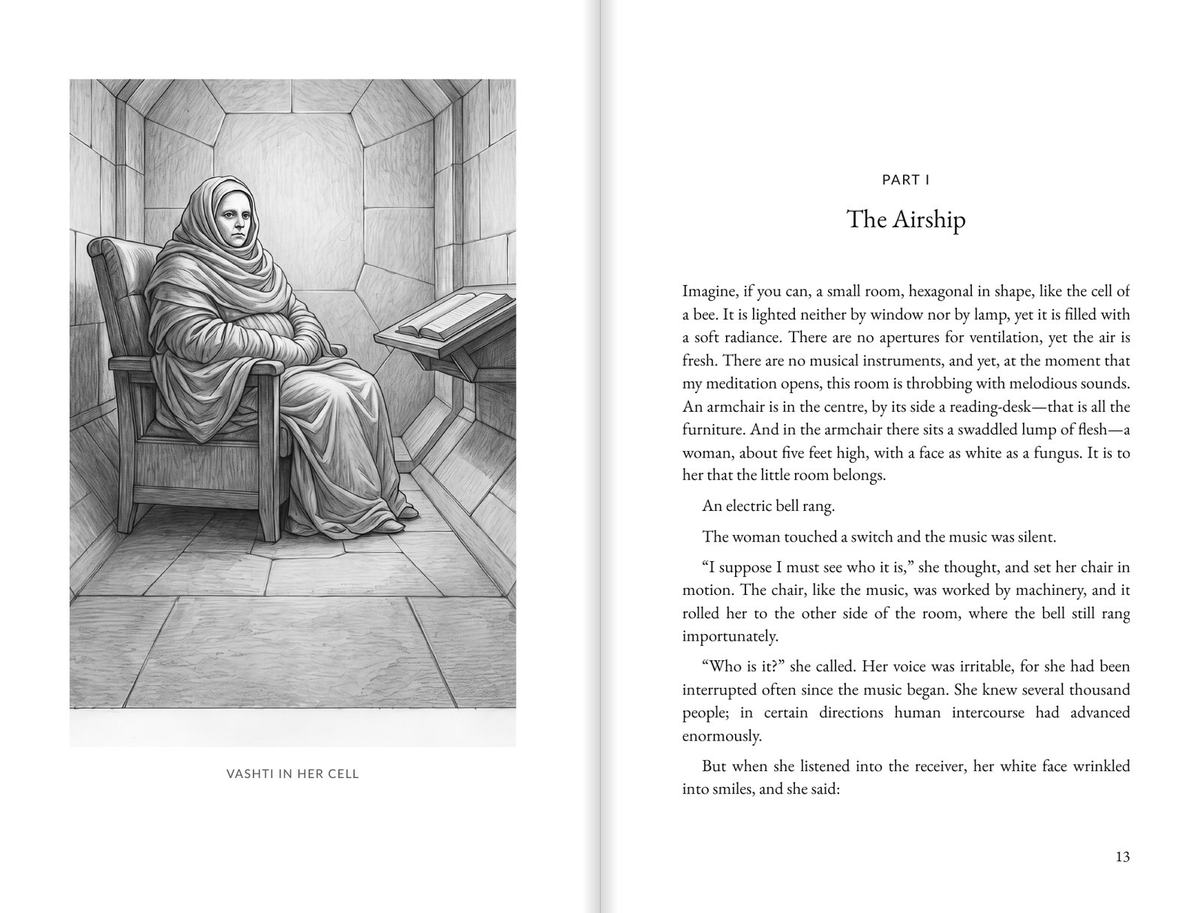
A spread from The Machine Stops: a full-page illustration of Vashti in her hexagonal cell facing the opening page of Part I, The Airship.
The Machine Stops · Vashti in her cell, facing the opening of Part I
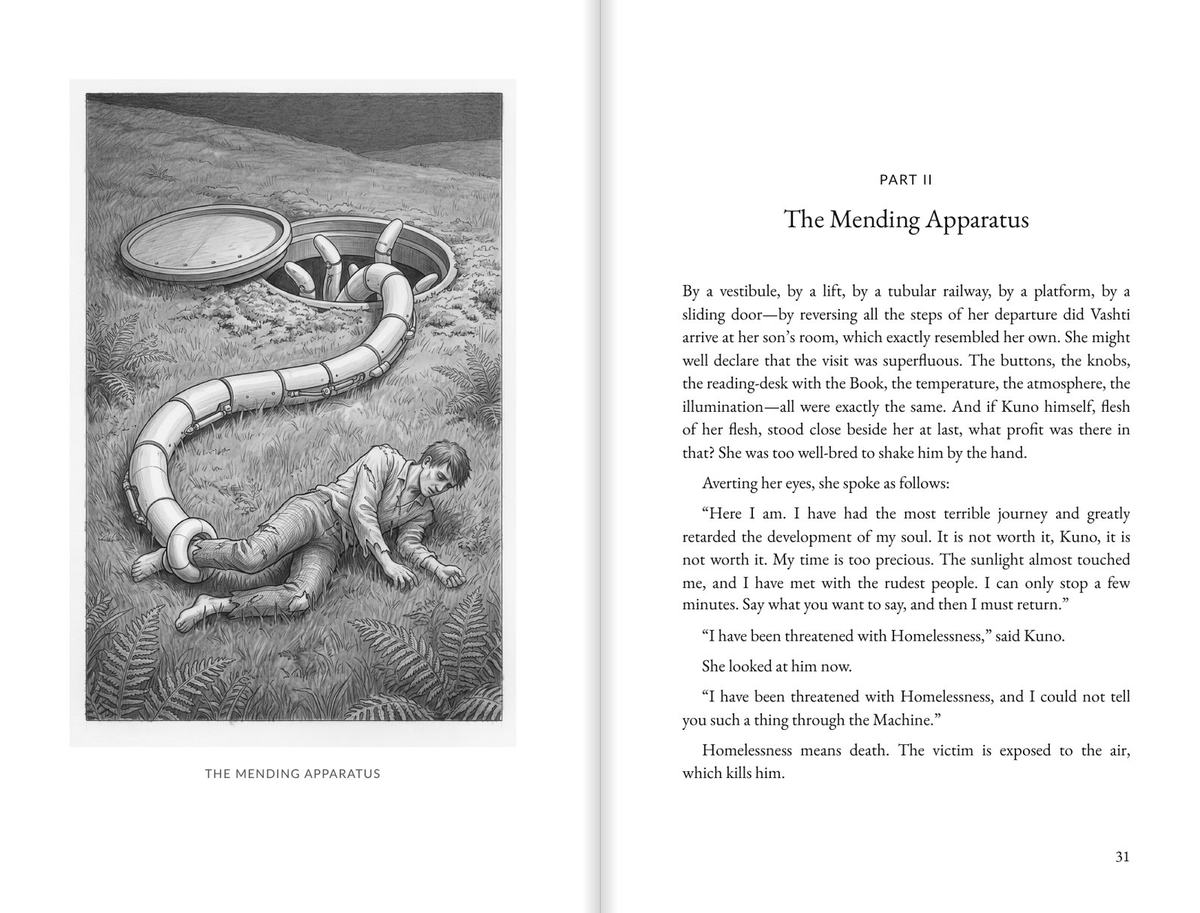
A spread from The Machine Stops showing the Mending Apparatus illustration beside the opening of Part II.
The Machine Stops · The Mending Apparatus
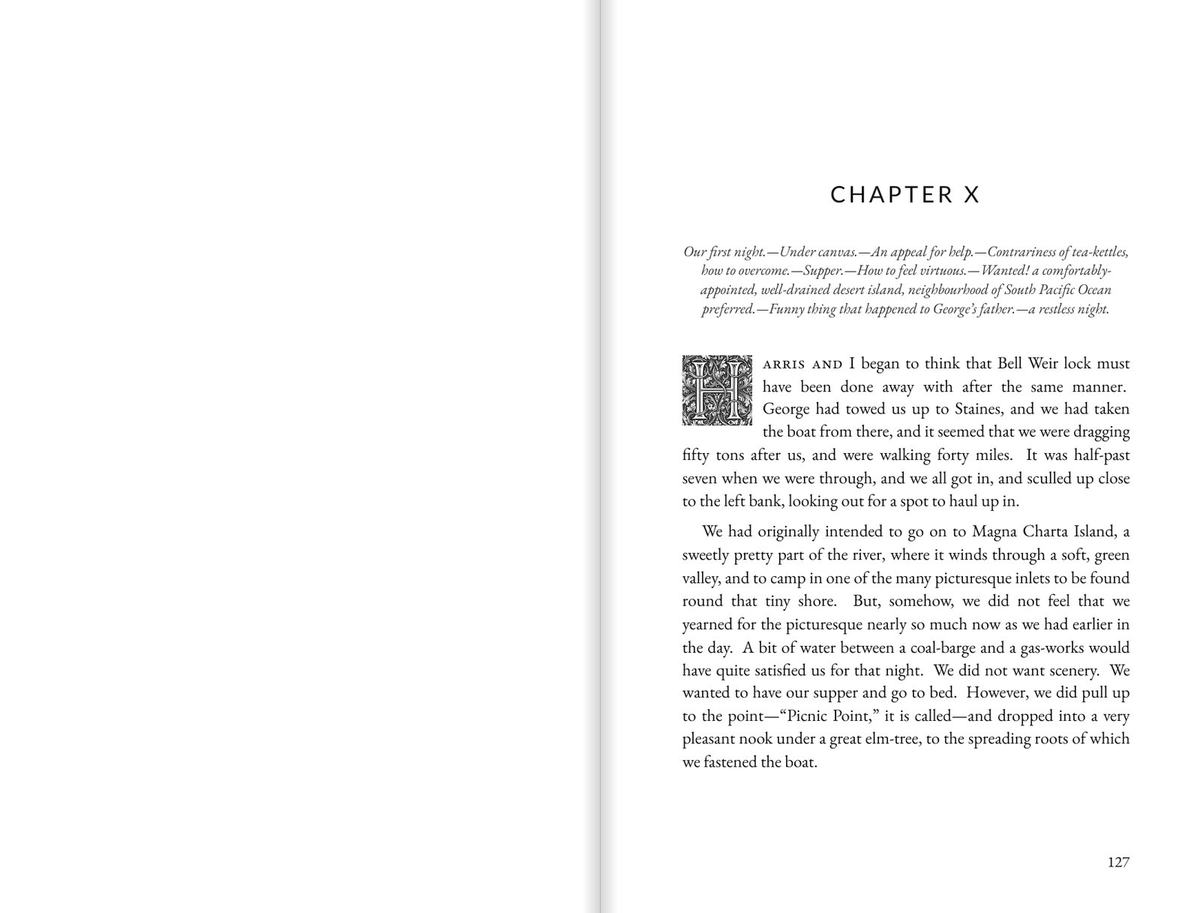
A spread from Three Men in a Boat showing Chapter X opening with a decorated initial letter H.
Three Men in a Boat · a chapter opening on an 1889 initial block
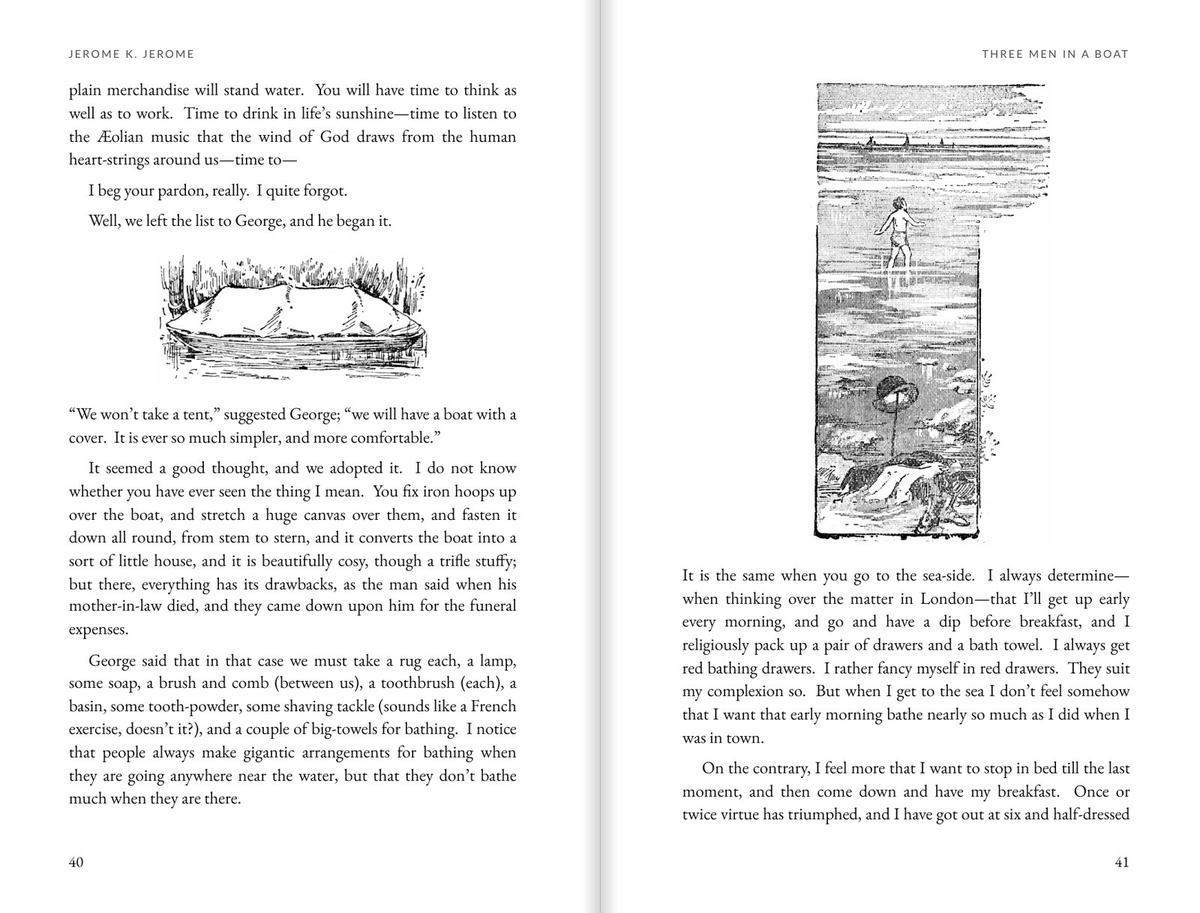
A spread from Three Men in a Boat with two of A. Frederics' 1889 drawings set into the text.
Three Men in a Boat · Frederics’ drawings, at their true relative sizes
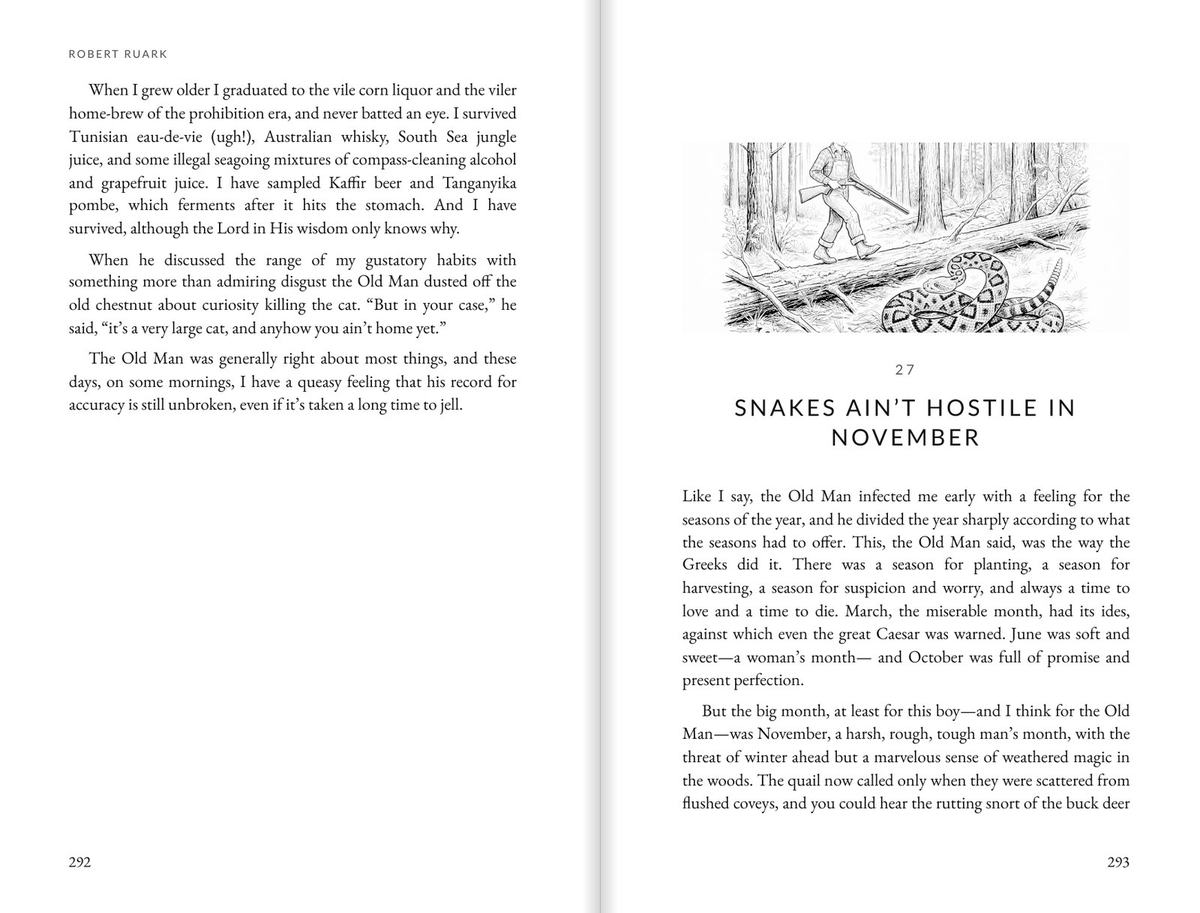
A spread from The Old Man's Boy Grows Older opening the chapter Snakes Ain't Hostile in November, with a drawing of a boy on a fallen log and a coiled rattlesnake.
The Old Man’s Boy Grows Older · a chapter opening and its drawing
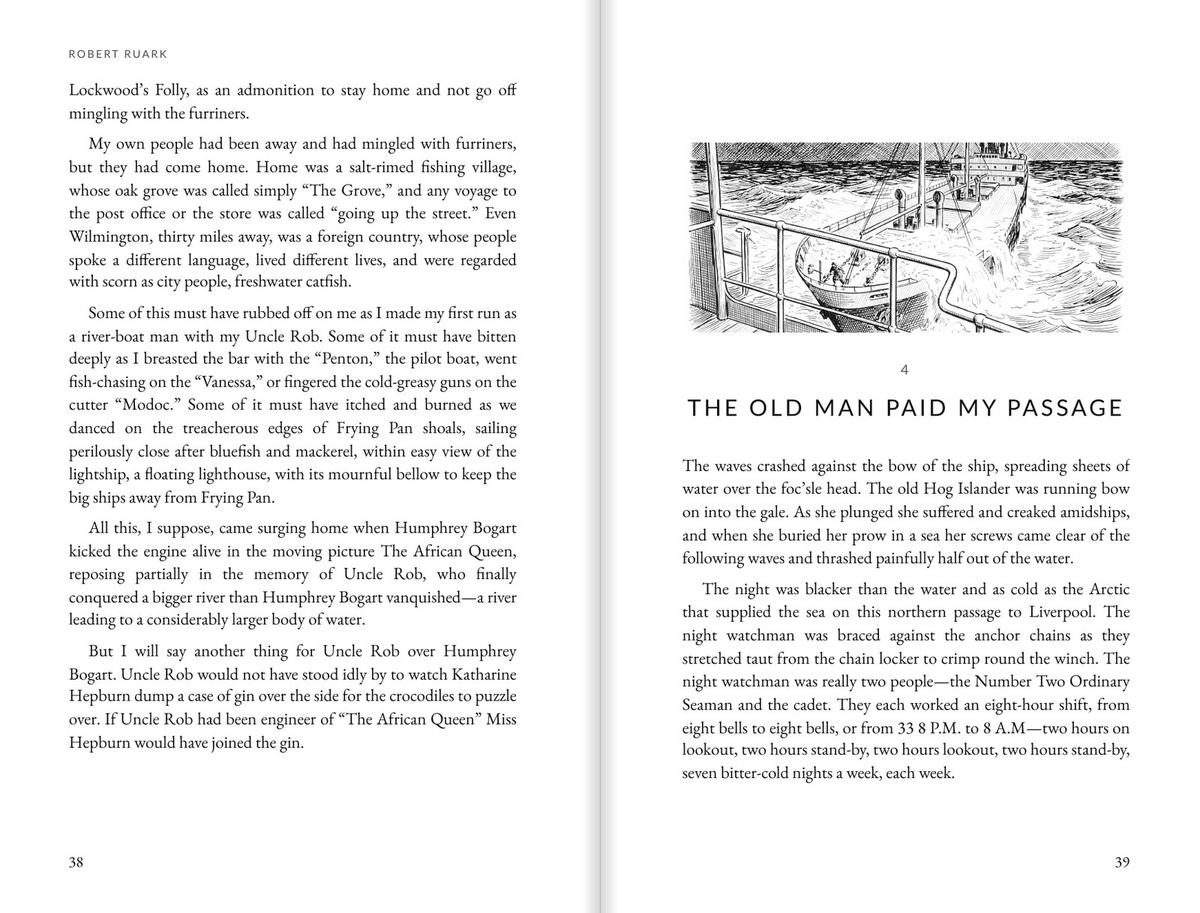
A spread from The Old Man's Boy Grows Older opening the chapter The Old Man Paid My Passage, with a drawing of a freighter in a gale.
The Old Man’s Boy Grows Older · the Hog Islander, chapter four

Spreads are from the production files, not mock-ups

The journal

How the books actually get made.

Not marketing. The research, the dead ends and the things we got wrong — written up as we go, because the work is more interesting than the announcement.

Illustration

Who was A. Frederics?

Sixty-eight drawings went into the 1889 first edition. Nobody is certain who drew them — and the bibliographies do not agree with each other.

Rights

The Ruark problem

A book free to print here and locked for decades elsewhere, and an illustrator whose death date nobody can establish.

Editorial

What we will not do

The titles we turn down, and why reprinting Dracula would be a waste of everybody’s money.

Where we actually are · all three titles

The honest status board.

Small presses fail quietly and pretend otherwise. We would rather publish the state of things and let you judge. Every title gets its own board, and the lines that are not done say so.

The Machine Stops

Forgotten Futures · No. 1 — in print

  • Editorial Three stories edited, illustrated and set — 102 pages Done
  • Rights Source pinned and rights position established before typesetting Done
  • Cover Artwork finished, spine measured at 5.5 mm and the wrap printed Done
  • Printer Stock, caliper and spine geometry confirmed by the printer Done
  • Proof A physical copy in hand, checked and approved Approved — second run, correct grain
  • Pledges Readers pledged, in writing, before anything is printed Open — counting
  • Fulfilment One complete order printed, packed and delivered to a reader Not yet proven

Three Men in a Boat

Idle Thoughts · No. 1 — going to print

  • Editorial 1889 text set, 264 pages, every chapter opening on a recto Done
  • Illustration 67 Frederics drawings placed, and all 19 chapter initials Done
  • Rights Public domain. Text and drawings both clear Done
  • Cover Built and checked — 14.3 mm spine, 3 mm bleed Done
  • Printer Price and spine quoted at this extent Quoted — order going in
  • Pledges Readers pledged, in writing, before anything is printed Open — counting
  • Printed Paid for, on a press, in hand Not yet — awaiting the printer

The Old Man’s Boy Grows Older

First Light · No. 1 — going to print

  • Editorial Set from the first edition, 332 pages, read against it twice Done
  • Illustration 31 drawings made for this edition Done
  • Rights Clear in South Africa since 2016. Not for export — and we say so in the book Done
  • Cover Built and checked — 17.9 mm spine, 3 mm bleed Done
  • Printer Price and spine quoted at this extent Quoted — order going in
  • Pledges Readers pledged, in writing, before anything is printed Open — counting
  • Printed Paid for, on a press, in hand Not yet — awaiting the printer

This board changes as the work does. If you have ordered or pledged, you will hear from us when a line that affects you changes — that is the only email we intend to send.

What we are looking at next

There is a gap, and it is a large one.

South African copyright runs for fifty years after an author dies. Britain and the European Union run for seventy. That twenty-year difference is a band of writers nobody in London can reissue and we can — legally, here, now.

The size of it

3,157 books

English titles whose authors died between 1956 and 1975: free to publish in South Africa, still under copyright in Britain and the EU, and already existing as clean, proofread text. Counted from Project Gutenberg’s own catalogue against its authority data on death years — not estimated.

Where we look

A library, shelf by shelf

We have read the shelves of a private angling library of 1,462 titles, photograph by photograph, and cross-checked it against its own 2012 catalogue. Most of it we cannot print. Some of it nobody has reprinted in fifty years. That is how a list like First Light gets built — by looking at actual books.

Your turn

Tell us which one

We would rather print the book somebody is waiting for than the one we happen to like. If there is a title you would buy, name it — it costs nothing and we read every one.

Name a title

Or be told when the next one prints.

Rights positions are checked per title before anything is announced

Lost books programme

What book can't you find?

There is a particular frustration in knowing a book exists, wanting it, and finding that no shop can order it and no publisher will admit to owning it. That gap is most of the reason we are here.

Tell us about a book you cannot get. We will find out whether it can legally and economically be brought back.

We investigate its bibliographic history, who holds the rights now, and whether an edition would work. If it can be done, we will try. If it can't, we will tell you why.

  • We check the rights position before republishing anything.
  • Out of print does not mean out of copyright.
  • If ownership cannot be established safely, the title is parked.

Noted — thank you.

We read every nomination ourselves. If we take yours further, you will hear from us directly.

Would you buy a new edition? (optional)

We keep your name and contact details only to tell you about this book, and we do not share them with anyone. Ask us to delete them at any time and we will. hello@edbooks.co.za

No payment, no account. We'll only email you about this nomination.

For booksellers and trade

You already know what readers cannot find.

You hear it across the counter every week: a title someone wants, that you cannot order, from a publisher who no longer prints it. That information is worth more than any market research we could buy.

Tell us what your customers keep asking for.

We are not looking to push stock at you. We are looking for a small number of shops whose judgement we can learn from — independents, second-hand and antiquarian dealers, museum and heritage shops, and specialist retailers where the subject genuinely matches the room.

  • Short runs and print-on-demand, so nobody carries dead stock.
  • Subject matched to shop — not every title in every shop.
  • Terms discussed properly once there is a book to discuss.

Thank you — we'll be in touch.

We are keeping this list deliberately small, and we read every message ourselves.

What would be useful to talk about? (choose any)

We keep your name and contact details only to tell you about this book, and we do not share them with anyone. Ask us to delete them at any time and we will. hello@edbooks.co.za

No commitment and no order. A person reads this, not a system.